Most music listeners—musicians or not—have a sense of a number of components they hear within a song.
For example, they could distinguish a verse vs. a chorus, sing along to a melody and notice the harmonies, chords, and rhythms taking shape around it, and maybe even pick out how dynamics are being used to guide their listening experience.
All of these elements can be bundled into one particular process of music creation, a word less known to the average listener—what truly shapes their journey after everything has been recorded is arrangement.
In this guide, let’s dive into the exciting world of arrangement, from its role and key components to tips for navigating the process effectively.
What is arrangement in music?
In short, arrangement in music is where songwriting meets architecture. It’s where a music creator implements their strategy for the foundation, structure, energy, and emotional direction for a track.
Below, we’ll delve into the individual components that make up an arrangement, and address some common mistakes and misconceptions.
Understanding the role of music arrangement
Whatever the genre or time period, all songs contain some form of an arrangement. At its core, it’s the process of deciding how a piece of music will be performed and presented, including choosing which instruments will play which parts, how the sections of a song will flow, and what textures will be featured at what time.
Does this remind you of piano lessons as a kid, or orchestra class as a teen? It should, because arrangement was a crucial step of composing classical music. A composer would write the music, assign the instruments, and indicate this arrangement clearly on sheet music for those who would perform it in the future.
Today, the arrangement of modern popular music is decided by the band or producer, and generally not given back to the performer in writing for their performances. So, while arrangement has remained an essential element of music, modern recording technologies have changed who decides it and how flexible it is in the context of performing that piece of music live.
Through arrangement decisions, that first creative spark—a simple melody, or a particular chord progression that you just can’t get out of your head—can be morphed into a club hit, ballad, or corrido. The methodical ways in which we as producers create layers, play with dynamics, and order key moments all make up what arranging is. It’s the bridge between composition and production, both essential steps before the final track is delivered to listeners.
And perhaps most importantly, arrangement is where we can inject our creative brand as producers. How will you arrange your music to be distinctly you? In the same way that a tenured guitarist can pick out who might have influenced a player based on how they solo, a pro producer should be able to pull from the music they love and color it in their unique way.
Key components of music arrangement
This might all sound very broad thus far—let’s now dig into the individual moving parts of arranging music. Understanding these components will take time and practice, but in the end, give you the control to build songs that feel intentional, balanced, and emotionally dynamic.
Form and structure
A song’s form or structure refers to how its sections are ordered, and what sections are included. The most common structures for modern Western music include some form of an intro, a few verses with choruses, and the occasional bridge to cut them apart, along with some form of an outro.
Whereas verses usually sound similar musically while featuring unique lyrics, choruses often repeat everything, though usually building with additional harmonies or other layers in the production to push the momentum forward. A tasteful intro can set the atmosphere and bring a listener into your universe before the main event, whereas a bridge or outro can create a memorable, perhaps higher-risk inclusion.
There’s tons of room for variation and experimentation here—for example, fans of Rush may come to expect bridges with drastic changes of tempo and meter, though not many people were expecting the multi-minutes-long outro in “Layla” back in 1970.
It’s also very common in metal tracks to showcase virtuosic introductions with the feel of classical music, which is one way the musicians showcase their compositional versatility and incredible command over their instruments.
Instrumentation and orchestration
Instrumentation is the palette of sounds you choose, whether that’s a group of live players or your preset on a travel-ready instrument like Ableton Move.
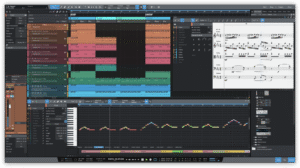
To return to classical music, many composers utilize a number of different clefs to lay out the parts of each instrument in a symphony. For us producers, it’s the DAW. Once we know our instrumentation, the process of orchestration comes into play.
Orchestration decides how each of your sonic elements interact: what plays the melody, what supports it, and how textures evolve over time.
Here are a few ideas to consider when it comes to instrumentation and orchestration:
- A pop song might start with a solo piano and gradually build to a full band with synth layers and backing vocals. The feeling of constant building towards a proclamatory climax, perhaps in only two or three minutes, is essential to this genre built formerly around radio, and now streaming and content.
- A film score might have a hundred players in one piece, but selectively use different instrument groups to reflect changes in emotion or scene intensity. Entire groups of instruments might have a multi-page rest, which we can look at the same way as an INSTRUMENT preset that only comes up in a specific moment in the DAW.
- A house music producer might automate filters or EQs on synth layers to evolve a section dynamically. They might prepare a number of options for themselves to evolve a song differently with each live performance, based on what the vibe of the room is calling for.
Rhythm and groove
Rhythm is in our bones as human beings. The ability to move along with a piece of music, sometimes in alignment with our own heartbeats, is a universal language.
In arranging, rhythm involves decisions like:
- Where to place rhythmic accents (ex. on-beat vs. syncopated, or hard-panned in the stereo image for a specific sonic experience).
- How dense or sparse percussion should be across the entire track, or by section.
- Using filters and other effects to suddenly change the qualities of a rhythm that the listener has grown accustomed to.
- Selecting the timbres of the percussive elements (a full drum kit, unconventional field recordings or samples, etc.).
- Dialing in the attack, sustain, and cutoff of your other instruments. While not traditionally thought of as a part of the rhythm section, tracking a highly staccato section through a strings preset on your favorite synthesizer can take center stage for rhythm just as much as tone!
Groove, however, is a bit more nuanced in reference to the feel of a track. This is a subtle art, as D’Angelo so masterfully showed us with his way of slightly dragging drums and basses to create his signature sound that has influenced artists across generations.
With an approach combining playfulness, experimentation, and confidence, these elements can create a powerful interplay that not only inspires movement in the listener, but makes that movement even more memorable. The best grooves can create a physical desire for the body to return to that universe, marking them as yet another crucial component of arrangement.
Dynamics and tempo
Dynamics refer to changes in volume or intensity, used to create peaks and valleys throughout a track. The mixing phase of music production focuses heavily on how a track’s overall dynamic range will take shape. We can look at dynamics by individual tracks or in terms of the entire master, and this is where our role as producers really takes center stage.
Tempo refers to a piece of music’s speed, expressed in the DAW in beats per minute (BPM). Some songs change tempowhile (most) others remain consistent throughout.
We can track common tempo ranges by genre; for example, cumbia grooves sit between 90 – 110 BPM, whereas techno tracks might range from 125 – 140 BPM. This is an excellent bit of knowledge to keep in your back pocket as a producer to both save time in setting up sessions and allow you to blend genres and influences more naturally.
The difference between song structure and arrangement
Though often used interchangeably, song structure and arrangement serve distinct roles.
- Song structure can be looked at as a blueprintif we dare continue our sonic architecture metaphor. Here, we plan the layout of our song sections, as discussed above.
- Arrangement can be looked at as our execution of that plan. What embellishments do we add to the core material? How do we present this to the listener?
Think of it this way—two songs can share the exact same structure, such as:
- Intro
- Verse
- Chorus
- Verse
- Chorus
- Bridge
- Chorus
And yet, drawing on that same form, the tracks can sound completely different because of their arrangement choices. The below songs all use this exact core formula, but are completely distinct from one another:
The Willow track notably also takes advantage of a pre-chorus, something we didn’t touch on. What makes this element quite enticing is that, while it repeats the lyrics as a chorus would, it remains closer to the form of the verse, creating a more gradual transition to what’s sometimes a shorter chorus.
You’ll also notice that a track like Mdou Moctar’s presents another part of form that isn’t as common in pop music today: the solo. This is included to remind us that, while we can look at music from all over the world embracing the same basic components of form, the way we arrange and divert from them (even temporarily) is what defines our music.
Creating a strong and effective music arrangement
Emotional intent and variations
One strategy that can help you get started with your own arrangement is to first think on your song’s emotional intent. What do you want the listener to feel? In what universe do you want them to exist for the duration of your track? Once you have that feeling in mind, don’t let it go. When in doubt or deciding between two paths, let this feeling be your guide.
From there, experiment with variations. The best producers haven’t gotten to where they are because the first preset they designed was perfect and they never changed it again. Most artists of any craft will tell you that it took far more than a few tries to discover their true signature, and music production is no exception.
Try different arrangements and see how you feel listening to the track. Learn how to use a new method out of everything we’ve outlined today, even if it doesn’t feel like it’s specifically for your genre. You truly never know which trick or idea will come in handy when sculpting sounds.
Contrast and refinements
Last but not least, contrast is one of the most powerful tools in music arrangement. It keeps listeners emotionally invested by alternating between tension and release, density and space, or acoustic and electronic textures.
Here are some examples of effective contrast that you might try out:
- Instead of a gradual increase from quiet to loud, what if each section has its distinct, palpable dynamic? Maybe your introduction is intense, but your verses are soft and timid, with sudden explosions of energy with each chorus.
- Play with different techniques for panning; perhaps try keeping your early sections closer to a mono output before widening the stereo image for the rest of the track.
Once you have your initial idea laid out, keep tweaking. You’ve made the big choices, but what about the small details? How does each transition feel—smooth and natural, or too out of left field? Are there any moments when a listener might lose interest, and how can you counter that? Is every use of repetition intentional, or is some of it just to fill time, or because you feel like you have to do it that way?
With every track, you’ll continue to shape your signature sound, and likely learn how to reach it quicker. Through arrangement, you can turn sparks into an unforgettable show.
Explore Splice INSTRUMENT, our virtual instrument plugin that puts an ever-growing catalog of free and premium sounds at your fingertips:
November 21, 2025